

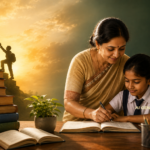



“The Invisible Force That Transforms Dreams into Reality“
Table Of Content
- Mother Teresa – Will Power in Compassion
- Modern-Day Examples
- Mary Kom – Will Power in the Ring
- E Sreedharan – The Metro Man of India
- Dipa Karmakar – Vaulting Over Limitations
- Everyday Will Power in Indian Society
- Cultural Factors That Shape Indian Will Power
- Building Will Power – Lessons from India
- Conclusion
By Shikha Tailang, Bhopal
Summary :
This article explores the timeless power of will power in the Indian context, blending philosophy, history, spirituality, and modern-day examples. From Gandhi’s non-violence to Mary Kom’s boxing victories, it highlights how determination shapes destinies. Rooted in India’s cultural and spiritual heritage, will power emerges as the strength that connects aspiration to achievement. Kindly now read about the magical power of will in details-
Mother Teresa – Will Power in Compassion
Though born in Albania, Mother Teresa’s will power found its fullest expression in the streets of Kolkata. Facing disease, poverty, and bureaucratic resistance, she relentlessly served the “poorest of the poor” for decades. Her inner strength came not from wealth or institutional support but from an unshakable faith in her mission and a heart full of compassion.
Modern-Day Examples
Mary Kom – Will Power in the Ring
Born in a humble family in Manipur, Mary Kom fought against gender bias, financial limitations, and societal expectations to become a six-time world boxing champion. Even after marriage and motherhood, she returned to win medals, showing that true will power knows no age or obstacle.
Her story is a symbol of modern Indian womanhood—strong, determined, and unyielding.
E Sreedharan – The Metro Man of India
E. Sreedharan, known for his pioneering work on the Delhi Metro and Konkan Railway, is an example of administrative will power. In a system often criticized for inefficiency, he demonstrated how discipline, ethics, and determination can drive massive infrastructure projects to success within deadlines and budgets.
He once remarked that will power is not just a personal virtue but a professional necessity in public service.
Dipa Karmakar – Vaulting Over Limitations
The gymnast from Tripura, Dipa Karmakar, rose from modest beginnings to perform the highly risky “Produnova” vault at the 2016 Rio Olympics, placing India on the global gymnastics map. Her sheer will power helped her train under subpar conditions and limited resources.
She has inspired a new generation of athletes to dream big despite the odds.
Everyday Will Power in Indian Society
Will power is not just found in historical heroes or public figures. It pulses through the everyday lives of millions of Indians:
- The vegetable vendor who works tirelessly to educate her children.
- The UPSC aspirant who studies 14 hours a day while working part-time jobs.
- The farmer who persists despite erratic rains and market instability.
- The transgender activist fighting for dignity and legal recognition in a deeply traditional society.
These unsung heroes reflect the everyday resilience and will power embedded in the Indian spirit.
Cultural Factors That Shape Indian Will Power
- Spiritual Background: Indian culture encourages introspection, meditation, and inner strength. Practices like yoga and pranayama enhance mental focus and discipline.
- Joint Family System: Living in large families teaches patience, responsibility, and self-restraint – all components of will power.
- Value of Education: Education is often seen as a pathway to transformation, leading individuals from rural and marginalized backgrounds to dream big and work harder.
- Cultural Narratives: Epics like the Ramayana and Mahabharata showcase characters like Rama, Sita, Arjuna, and Karna who exhibit tremendous mental fortitude in the face of adversity.
Building Will Power – Lessons from India
- Start with a Sankalp (Resolution): A focused intention, like a New Year resolution or a vow during a religious fast, is the seed of will power.
- Tap into Community Support: Be it satsangs, self-help groups, or coaching institutes, collective environments foster accountability and perseverance.
- Use Adversity as Fuel: Indian society teaches that suffering has meaning. Many use pain as a catalyst for transformation.
- Balance Material and Spiritual: A unique feature of Indian will power is its grounding in both the worldly (artha and kama) and the transcendent (dharma and moksha).
Conclusion
Will power in the Indian context is not just a psychological attribute; it is a holistic force that encompasses mind, heart, and soul. It is nourished by a rich spiritual tradition, strengthened by cultural values, and proven by countless stories of ordinary and extraordinary Indians.
Whether it’s a monk meditating in the Himalayas, a freedom fighter resisting colonial rule, or a student burning the midnight oil for a better future—each story reaffirms that will power is the invisible thread that connects dreams to reality.
In a world increasingly driven by distractions and instant gratification, India reminds us that the ancient path of patience, perseverance, and purpose is still the most powerful way forward.

Other Articles


One Comment
Comments are closed.




Nice image and the article is great too!