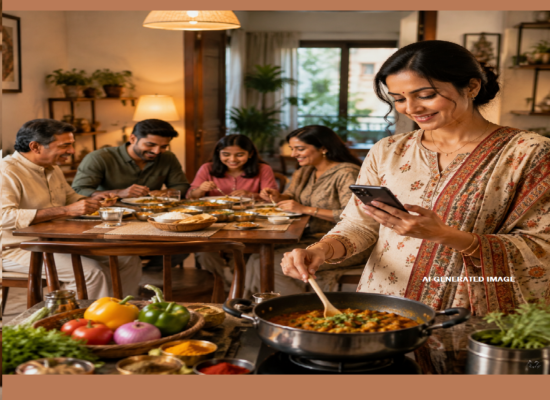




How Women Are Transforming Home Kitchens into Thriving Food Businesses
By Pavithra Sathyaraj
(Founder, SatharaWords Innovations • Pavi’s Food Tales — Coimbatore, Tamil Nadu)
The Entrepreneur Hidden Behind the Apron
Ask any homemaker to describe her day, and she will likely undersell it. “I just cook, clean, manage the house,” she might say, almost apologetically. But sit with her for an hour, and a very different picture emerges.
She knows precisely how many grams of rice will feed five people without waste. She has negotiated with the vegetable vendor since the day prices quietly crept up. She has stretched a modest grocery budget across thirty days without anyone in the family noticing the careful arithmetic behind it. She has managed a dozen tasks at once — soaking lentils while helping with homework, answering a phone call while watching a pot, planning tomorrow’s menu while finishing today’s dishes.
These are not small feats. They are, in fact, the exact skills taught in business schools under more impressive names: inventory management, cost optimisation, multitasking under pressure, resourcefulness in the face of constraints. The homemaker has been practising entrepreneurship long before she ever called herself an entrepreneur.
What she has often lacked is not capability, but recognition — including her own recognition of herself. Many women describe the moment they began selling their food not as a grand business decision, but almost as an accident. A neighbour tasted her filter coffee and asked to buy a packet. A relative requested her wedding-special sweets for an office party. A friend, after one bite of her tiffin, asked, “Why don’t you sell this?”
That single question often becomes a turning point. It nudges a woman to look at her own kitchen with new eyes — not as a space of obligation, but as a space of value. The transition from “I cook for my family” to “I run a small food business” is rarely dramatic. It usually happens gradually, almost shyly, as confidence catches up with capability.
What makes this shift so powerful is that it does not require women to become someone new. It only requires them to recognise the entrepreneur who was quietly there all along — measuring, managing, multitasking — behind the apron.
(To be Contd. …)