

“Where ordinary moments become timeless poetry of family and life.”
By Pallavi Tripathi, Durg (C.G.)
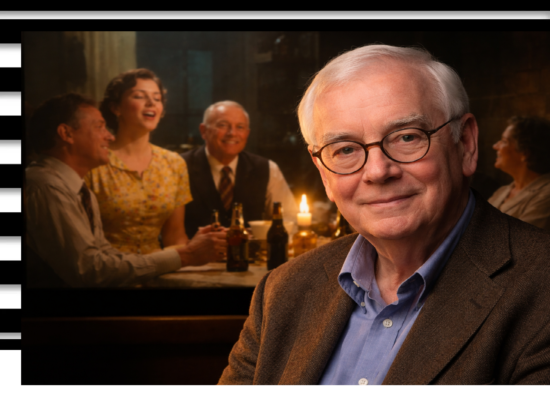
Terence Davies is often described as “a poet with a camera.” In his films, he did not focus on grand heroes or spectacular events; instead, he portrayed the small joys, struggles, and emotional truths of ordinary families with remarkable sensitivity.
Watching his films often feels like reading a personal diary of an artist—one filled with home, family, memories, songs, rain, streets, and the quiet moments of everyday life. His work reminds us that the true beauty of life lies in the simple moments we often overlook.
Discovering Extraordinary Beauty in Ordinary Life Terence Davies believed that one does not have to travel far to understand life. Home, family, and childhood memories themselves hold the greatest stories. In many of his films, we see ordinary families— families that laugh together, argue sometimes, face hardships, and still remain connected through love.
This reminds us of an important truth: Every family experiences both joy and struggle. But when we look at life with a positive perspective, those experiences help us grow stronger and wiser. The Power of Memories and the Value of Family A central theme in Davies’s films is memory. He once said that he did not possess a photographic memory, but rather an “emotional memory.” In other words, he remembered not just events, but the feelings attached to them.
When we think about our own family memories—
• the joy of festivals
• songs sung together at home
• a mother’s gentle scolding
• a father’s guidance
• laughter shared with siblings we realize that these small moments are the true treasures of life.
Success Is Not Measured Only by Money Many of Davies’s films did not achieve massive box-office success. Yet he never stopped making films. For him, cinema was not a business meant only for earning money, but a medium through which he could express his deepest thoughts and emotions.
To be contd. ….